There are towns in Arizona that announce themselves with billboards and big box stores. Patagonia is not one of them. Tucked into a green valley at 4,000 feet elevation between the Santa Rita Mountains to the north and the Patagonia Mountains to the south, this former silver mining town of under 1,000 people hits you quietly — brightly painted storefronts, a boardwalk along the main drag, the smell of coffee drifting out of an open door — and then it doesn’t let go.
When prospectors struck silver in southern Arizona in the mid-1800s, Patagonia sprang up to supply them. The mines played out, but the town persevered, reinventing itself over the decades into something genuinely rare: a place equally beloved by artists, birdwatchers, gravel cyclists, wine lovers, hikers, and anyone who just wants to sit somewhere beautiful and slow down. It sits about 60 miles south of Tucson along Highway 82 — close enough for a day trip from the city, but far enough that it still feels like a world apart.
The word that keeps coming up when people describe Patagonia is “quirky.” That’s not wrong, but it’s not quite complete either. Patagonia is the kind of town where a low-intervention natural wine bar operates out of a smelter alley, a working lumber company hosts live music and mountain biking events on weekends, and the local museum is housed in Arizona’s longest continuously-used elementary school building. The quirk isn’t manufactured. It’s just what happens when creative, independent people find a beautiful corner of the world and dig in.
Downtown: Start on McKeown Avenue
The heart of Patagonia is a short, walkable stretch of McKeown Avenue where most of the shops, galleries, and cafes are concentrated. Park anywhere and walk. The boardwalk that runs along the row of multi-colored storefronts is an invitation to slow down and browse, and the town’s compact layout means you can cover most of it on foot in an afternoon.
Gathering Grounds (335 McKeown Ave) is the essential first stop of any Patagonia day. They serve organic espresso, made-from-scratch pastries, sandwiches, soups, and hearty breakfast fare — a local gathering spot in every sense of the name. Open Monday through Friday from 7 a.m. to 3 p.m., and weekends from 8 a.m. to 3 p.m.
For shopping, Global Arts and Lillian’s Closet deals in treasures from around the corner and around the world — jewelry, folk art, home decor, and gift cards that lean global and eclectic. Down the block, Patagonia Trading Post focuses on local art and Southwestern goods, and has been a staple of the main street for years. Grayce’s Gift and Candle Shop rounds out the retail picture with a selection of global gifts, art, handmade candles, and organic dates that surprises most first-time visitors.
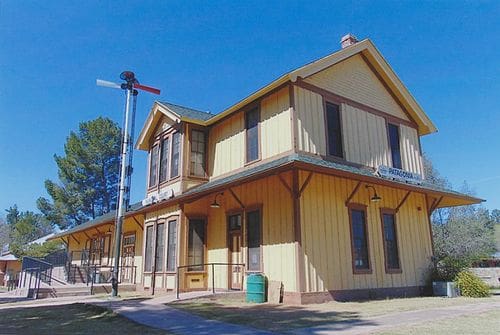
Patagonia’s downtown also has a quiet piece of railroad history hiding in plain sight. The 1900s-era Patagonia Train Depot — now serving as Town Hall — once served the New Mexico and Arizona Railroad. Built in the 1880s, the rail line connected Nogales to the main Southern Pacific line and later carried ore from the town’s silver and copper mines. A historic sign on the building still marks the distances to Guaymas, Sonora (255 miles) and San Francisco (1,035 miles). On the depot grounds, look for the sign pointing to the Patagonia Train Track Trail, an easy 2-mile non-motorized path that follows the old Southern Pacific rail bed from the depot to the town limits — a perfect short walk to stretch your legs between stops.
Eat and Drink Like a Local
Patagonia’s food and drink scene is genuinely impressive for a town its size.
Queen of Cups (320 Smelter Ave, accessible via alley) is one of the most talked-about spots in town. They produce small-batch, low-intervention wines on-site — made right behind Gathering Grounds — and pair them with a food menu drawing inspiration from Spain, Turkey, and whatever’s in season locally. The charcuterie boards with local cheeses and cured meats are a go-to, and the natural wine list is thoughtfully built. Open Fridays through Sundays.
Patagonia Lumber Co. is the town’s go-to evening and weekend spot — beer, wine, good vibes, live music most weekends, and a rotating lineup of food trucks. The Lumber Co. also anchors the local mountain biking community, hosting guided rides through the surrounding terrain on a regular basis. They’re open Wednesday through Sunday afternoons and evenings.
The Quail Covey (277 McKeown Ave) is a welcome newer addition to the Patagonia café scene, opened in 2025 by Patagonia native Gianna Luna in the remodeled Plaza de Patagonia space. Equal parts indoor/outdoor café, smoothie bar, and community mercantile, it serves creative smoothies, fresh sandwiches, and organic coffee from Adventure Coffee Roasting in Tucson — with a laptop bar and remote work space built right in. The café also showcases rotating local artisans: pottery, jewelry from Fly’s Gift Shop, bakery goods, and handmade items that change with the seasons. Open Thursday through Sunday, 6 a.m. to 1 p.m.
For authentic homemade Mexican cooking, Tamales y Tacos Elisa (300 Naugle Ave) is a beloved local fixture. The cheerful, colorful spot serves tamales, tacos, and daily specials made entirely from scratch — breakfast from 10 a.m. to noon, then lunch and dinner through 7 p.m., Monday through Saturday. Dine in or call ahead for takeout: (520) 987-5643.
Velvet Elvis at La Misión (formerly Velvet Elvis Pizza) offers pizzas, calzones, stromboli, and salads with a full bar and an extensive wine list — reliably good and well-loved for years.
Arts, Culture, and Performing Arts
Patagonia’s arts scene punches well above its weight class.
The Patagonia Creative Arts Association (301 McKeown Ave) is a non-profit center offering programming across all areas of the arts. Their venue also houses the Tin Shed Theater, where you can catch plays and films at an intimate scale that most cities can’t replicate. For classical music, the Benderly-Kendall Opera House hosts chamber music performances that draw serious audiences from across the region.
The Patagonia Museum, housed in a 104-year-old elementary school building on the hill above town, is a genuine time capsule. Exhibits cover the town’s school history, silver mining era, ranching life, and business community, with local docents who know the stories behind the photographs and artifacts. Knowledgeable volunteers like resident historian German Quiroga make visits feel more like a conversation than a tour. The museum is open Thursday through Saturday from 2 to 4 p.m. during October through May, and Friday through Saturday from 10 a.m. to 12:30 p.m. June through September, or by appointment.
Each fall, the Patagonia Fall Festival takes over the town park under a canopy of cottonwoods with 120-plus artisan booths, live music, local food, wine, and family activities. It’s one of the most beloved events in Santa Cruz County and draws visitors from across the region.
World-Class Birding, Right in Town
Patagonia is on the international birding map — and has been for decades. The area was included in Fifty Places to Go Birding Before You Die, earning its spot for the variety and accessibility of its birding sites.
The Tucson Bird Alliance’s Paton Center for Hummingbirds, located just off Naugle Avenue on the edge of town, has documented 212 bird species on a single residential property. Native plantings and feeders draw violet-crowned hummingbirds, Gray Hawks, varied buntings, thick-billed kingbirds, and more. It’s free to visit and connects via a one-mile nature trail to the Patagonia-Sonoita Creek Preserve, managed by The Nature Conservancy. The Preserve protects one of the last major riparian habitats in the region along Sonoita Creek — a cottonwood-willow gallery forest where more birders have spotted their first Gray Hawks than anywhere else in the world. During spring migration, a few hours here can yield 60 or more species.
Seven miles south of town, Patagonia Lake State Park is another Audubon-designated Important Bird Area with over 300 species on record. The 2.5-mile-long, 250-acre lake also offers fishing (rainbow trout stocked October through March), swimming, boating, hiking, and lakeside cabin camping. Guided pontoon boat birding tours run through the winter months.
Get Outside: Cycling, Hiking, and the Open Grasslands
Patagonia has quietly built a strong reputation in the gravel cycling world. The town is the gateway to some of the most compelling dirt roads in the Southwest, with routes winding through the San Rafael Valley — 90,000 acres of open ranchland on the Mexican border — and up into the Sky Island mountain passes. The Patagonia 50 Gravel Ride is a nationally recognized route, and the town hosts a full infrastructure for cyclists, including Patagonia Bikes on Smelter Avenue, which handles bike sales, service, rentals, and trail knowledge.
Hikers will find 20 miles of trails accessible through the Patagonia Lake State Park entrance fee, including the Sonoita Creek State Natural Area trails along the creek corridor. The southern terminus of the Arizona Trail runs directly through Patagonia, connecting the town to a continuous route all the way to Utah.
For riders, Circle Z Ranch — Arizona’s oldest guest ranch, four miles southwest of town along Highway 82 — offers access to 200 miles of horseback trails across 5,500 acres of private and adjacent federal land, with the Santa Ritas, the Patagonia Mountains, and the Santa Cruz Valley as the backdrop.
Getting There
Patagonia sits on Highway 82, roughly 60 miles south of Tucson. From Tucson, you can take I-19 south to Nogales and then head northeast on Highway 82, or take I-10 east and then Highway 83 south through Sonoita — the latter being the more scenic approach, passing through wine country on the way. From the Cochise County side, Patagonia is a comfortable drive west from Tombstone or Bisbee.
The town is best explored on foot once you arrive. Parking along McKeown Avenue is easy and free.
Plan Your Visit
Patagonia is a year-round destination, but fall is the sweet spot: the monsoons have passed, temperatures are ideal, the Fall Festival brings the whole town to life, and the golden light on the surrounding grasslands and mountain slopes is something else entirely. Spring is also excellent for birding. Summer is cooler here than in Tucson or Phoenix thanks to the elevation, making it a reasonable escape from the desert heat.
For a longer stay, Patagonia RV Park offers 28 full hook-up sites with water, sewer, electricity, and pecan and oak shade trees. Birdsong Desert Retreat just outside of town offers boutique accommodations for those wanting something quieter and more private. Circle Z Ranch books quickly in the fall through spring season, so plan ahead if a ranch stay is on the agenda.
Find local businesses, services, and attractions for Patagonia and all of Santa Cruz County at MySouthernArizona.com — your directory for the people and places that make this corner of Arizona worth visiting.